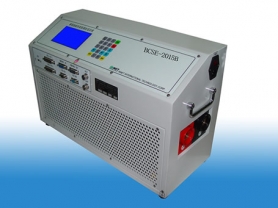

The WHC-300C wireless high-directional locator appears to be a professional device used in power systems, but based on current information, the specific purpose and functionality of this device are not clear. To better construct an article about this device, I will assume it is a wireless high-directional locator used for detecting or locating high-voltage power lines. Below is an outline of an article about the hypothetical WHC-300C wireless high-directional locator:
WHC-300C Wireless High-Directional Locator: Enhancing Power System Maintenance Efficiency
Introduction
In the maintenance and inspection process of power systems, efficiently and accurately locating and detecting issues in high-voltage lines is crucial. The WHC-300C wireless high-directional locator, as an advanced wireless detection tool, can help power engineers quickly locate line issues in complex working environments, ensuring the safe and stable operation of the power system.
Device Features
Wireless Communication: Utilizes wireless communication technology, eliminating the need for physical connections, thereby enhancing operational flexibility and safety.
High-Precision Positioning: Capable of accurately detecting the position of high-voltage lines and their surrounding environment, ensuring positioning accuracy.
Remote Operation: Equipped with remote operation capabilities, allowing detection work to be performed from a safe distance, reducing operational risks.
Multi-Function Integration: In addition to basic positioning functions, it integrates multiple features such as signal strength indication and fault point location.
Durable Design: Adopts a sturdy and durable design, suitable for use in various harsh environments.
Intuitive Display: Equipped with a high-definition display screen, clearly and intuitively presenting detection results.
Working Principle
The WHC-300C wireless high-directional locator utilizes the principle of electromagnetic induction to detect the position and status of high-voltage lines. The transmitter sends a signal of a specific frequency to the target line, while the receiver captures and analyzes the changes in this signal, thereby determining the line's position and other relevant information.
Application Scenarios
Line Detection: Used for quickly and accurately locating the path of new power lines during installation.
Fault Troubleshooting: When faults occur in the power system, it can quickly locate the fault point, assisting in troubleshooting.
Maintenance and Inspection: Used during regular inspection and maintenance of power facilities to detect line conditions, ensuring safe operation.
Emergency Response: In natural disasters or emergency situations, it is used to quickly locate damaged lines, accelerating power restoration.
Usage Case
A power company used the WHC-300C wireless high-directional locator for initial line positioning during the installation of a new transmission line. Through the device's accurate detection, the optimal line routing path was successfully identified and served as a guide during subsequent construction, significantly shortening the construction period.
Conclusion
The WHC-300C wireless high-directional locator, with its high precision and non-contact characteristics, becomes an ideal choice for line detection in power systems. Its widespread application not only enhances the safety of power operations but also greatly improves work efficiency, providing strong support for the stable operation of the power system.
Please note that the above content is an example constructed based on a hypothetical product. If you need specific technical details or brand information about the real WHC-300C wireless high-directional locator, please provide more detailed information to give a more accurate answer.