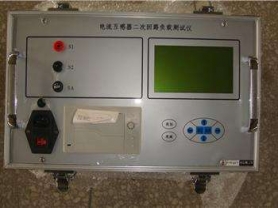

In the complex system of modern power industry, ensuring the reliability and safety of power equipment is the primary task. As a key equipment for power equipment testing and maintenance, the high current generator plays an extremely important role. It can simulate and generate high currents up to thousands of amperes, providing an efficient and precise testing method for the research, development, production, and maintenance of power systems. This article will deeply analyze the working principle, core functions, application fields, and key role of the high current generator in the power system.
1. Working Principle and Technical Characteristics
The high current generator is based on the principle of electromagnetic induction, and through a series of precise electronic control technologies, it efficiently converts lower input voltage into high current output. Its core technologies include:
High-frequency switching power supply: First, convert the mains power into high-frequency AC to improve energy conversion efficiency.
Inverter and rectification technology: Use power semiconductor devices such as IGBT to convert high-frequency AC into adjustable high-current DC or AC output.
Feedback control system: Use microprocessors or DSP chips to achieve precise control of output current, ensuring the stability and accuracy of current output.
Safety protection mechanism: Built-in multiple protection measures such as overcurrent, overheat, and short circuit to ensure the safety of equipment and operators.
2. Core Functions
Performance verification of power equipment: Test the high current withstand capability of transformers, circuit breakers, cables, and other power equipment to verify their thermal stability, insulation performance, and action characteristics.
Calibration of relay protection devices: Simulate fault currents to verify the response speed and action accuracy of relay protection devices.
Grounding system testing: Inject high current to detect grounding resistance and evaluate the effectiveness of the grounding system.
Research and teaching: Provide experimental conditions for research and teaching in fields such as power electronics and electrical engineering.
3. Application Fields
Power systems: Widely used in equipment commissioning, maintenance, and fault diagnosis in power plants and substations.
Electrical manufacturing: Conduct strict performance tests before equipment leaves the factory to ensure product quality.
Railway and rail transit: Regularly inspect and maintain the contact network and return lines of the traction power supply system.
New energy field: Performance evaluation of new power facilities such as electric vehicle charging stations and solar inverters.
4. Key Role in the Power System
The high current generator plays an irreplaceable role in the maintenance and fault troubleshooting of the power system. It can simulate extreme current conditions in real operating environments, helping engineers identify potential equipment defects in advance, avoid power outages caused by equipment failures, and ensure the stable operation of the power system. Before new equipment is put into operation, tests conducted with the high current generator are the final check on equipment safety and reliability, and are a strong guarantee for the safe operation of the power system.
5. Future Development Trends
With the continuous advancement of power technology, high current generators are developing towards intelligence, modularization, miniaturization, and higher power density. Integrating more advanced sensors and communication technologies to achieve remote control and data analysis will further improve testing efficiency and accuracy, better serving the rapid development and safety needs of the power industry.
In summary, the high current generator is not only a key technical equipment in power equipment testing and maintenance, but also an important guarantee for the safe and stable operation of the power system. With continuous technological innovation, its application prospects in the future power industry will be even broader.