Three-Phase Capacitance and Inductance Tester Parameters / Instrument Overview
Reactive power compensation capacitors are important equipment to meet the reactive power balance of the power system. In recent years, the issue of reactive power has received widespread attention from the power sector, and complete sets of reactive power compensation devices have been widely put into operation in distribution networks. The power supply requires real-time balance of active and reactive power in the system. Therefore, reactive power compensation devices should meet the requirements of automatic tracking and real-time compensation, which inevitably requires frequent switching of reactive power compensation capacitor banks. The switching operations of capacitor banks can generate overcurrent and overvoltage impacts, causing damage to capacitors.
To ensure the reliability of equipment, early detection of capacitor defects and avoidance of fault expansion require regular testing. On-site, capacitors are usually connected in parallel in groups. The traditional method is to remove the capacitor busbar and then use an old-fashioned capacitance meter for measurement. Since a capacitor bank consists of dozens to hundreds of small capacitors, the workload of disconnecting wires to measure capacitance is heavy, and frequent disconnection can cause screws to slip or not be tightened, leaving safety hazards and easily causing secondary damage to capacitors. Therefore, it is highly desirable to have a testing instrument that can measure the capacitance of each small capacitor without disconnecting the wires, reducing the burden on maintenance personnel, improving the efficiency of maintenance work, and enhancing the safety of distribution network operation.
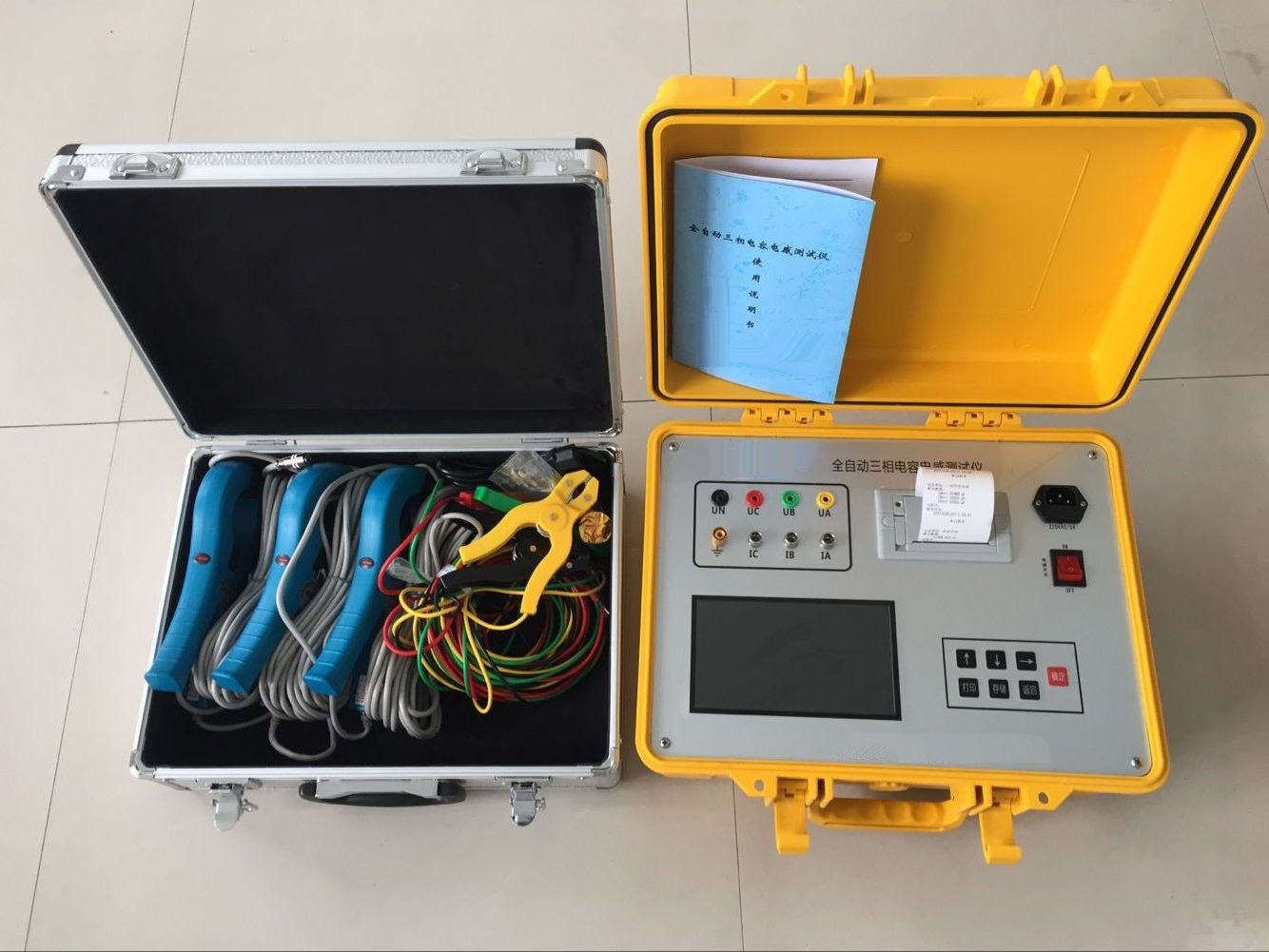
The TPCLC-S three-phase capacitance and inductance tester, developed and manufactured by our Yangzhou Tuopu Electrical Technology Co., Ltd., can measure the single-phase capacitance of parallel capacitor banks or three-phase capacitors of various connection types without disconnecting the wires. It can also measure the inductance of various reactors. Additionally, this instrument can measure current under power frequency conditions. The instrument is easy to wire and simple to operate, reducing the workload of maintenance personnel, greatly improving on-site testing efficiency, and providing safety assurance for the normal operation of the power grid.
Functional Features
1. TPCLC-S
three-phase capacitance and inductance tester can measure the individual single-phase capacitance of parallel capacitor banks without disconnecting wires, and simultaneously measure three-phase capacitance of various connection types. This instrument can also measure the inductance of various reactors and can be used as a power frequency current tester, serving three purposes in one unit to meet various on-site needs.
2. During measurement, the instrument displays the measured capacitance or inductance value, as well as the measured voltage, current, power, frequency, impedance, phase angle, and other data, to better analyze the quality of the test sample.
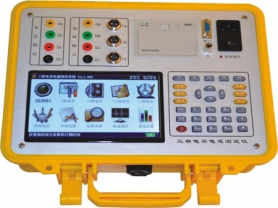
3. The instrument adopts a 240×128 large-screen backlit LCD display, which is clearly visible both day and night, with Chinese menu prompts for easy operation.
4. The instrument comes with a high-speed micro thermal printer: it can print measurement and historical data.
5. The instrument has a built-in large-capacity non-volatile memory: it can store 50 sets of measurement data.
6. The instrument has a built-in high-precision real-time clock function: it can calibrate date and time.
7. The instrument has overcurrent protection for the test power supply: short circuit of the power output will not damage the instrument.
Technical Parameters
1. Output voltage: ~2V, ~20V
2. Output current: ≤10A
2. Measurement range: Capacitance: 0.1μF~2000μF
Inductance: 0.1mH~10H
Current: 1mA~10A
Voltage: 0~25V
3. Measurement accuracy: Capacitance: ±(2%+2 digits)
Inductance: ±(2%+5 digits)
Current: ±(2%+2 digits)
Voltage: ±(2%+2 digits)
4. Working power supply: AC 220V±10%
5. Power frequency: 50±1Hz
6. Instrument power: 200W
7. Ambient temperature: -10℃~50℃
8. Ambient humidity: ≤85%RH
9. Instrument weight: 8kg
10. Dimensions: 350mm×230mm×190mm