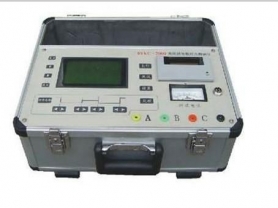

DC resistance testing technology is an important testing method in power systems, used to evaluate the resistance value of power equipment to ensure its performance and reliability. This article will explore the working principle, key technologies, and applications of DC resistance testing technology in modern power systems.
1. Introduction
With the continuous development of power systems and technological advancements, higher requirements have been placed on the testing and maintenance of power equipment. As a professional testing method, DC resistance testing technology plays an important role in power systems, effectively evaluating the resistance value of power equipment and ensuring the safe and stable operation of the power system.
2. Working Principle of DC Resistance Testing Technology
DC resistance testing technology works based on the following principles:
Four-wire measurement method: Uses two current wires and two voltage wires to eliminate the influence of lead resistance and improve measurement accuracy.
Constant current source: Applies a stable DC current to the device under test, measures the resulting voltage drop, and calculates the resistance value.
Data acquisition and analysis: Uses a high-precision data acquisition system to monitor and record test data in real-time, and perform analysis and processing.
3. Key Technologies
High-precision measurement: Uses high-precision voltage and current sensors to ensure the accuracy of measurement results.
Wide range measurement: Supports resistance measurement ranges from milliohms to kiloohms.
Automatic compensation: Automatically compensates for errors caused by contact resistance and lead resistance.
Data processing: Built-in data processing software automatically analyzes measurement data and provides intuitive charts and reports.
Remote control: Supports remote control of the tester via wireless or wired methods, facilitating operation in complex environments.
4. Application Cases
4.1 Transformer Winding Resistance Testing
Background: A power company needed to test the winding resistance of transformers during routine maintenance.
Test content: Used a DC resistance tester to measure the resistance of transformer windings.
Test results: Found that the winding resistance of one transformer had increased compared to historical data, and promptly conducted fault troubleshooting and repair.
4.2 Cable Conductor Resistance Testing
Background: Newly constructed transmission lines required resistance testing of cable conductors.
Test content: Used a DC resistance tester to measure the resistance of cable conductors.
Test results: All cable conductors passed the test, ensuring the safe operation of the transmission lines.
5. Latest Developments
With technological advancements, DC resistance testing technology is also continuously progressing:
Intelligent integration: Integrating DC resistance testers with other testing equipment to form a comprehensive testing system.
Remote monitoring: Using wireless communication technology to achieve remote monitoring and data transmission, improving work efficiency.
Automated testing: Adopting automated testing procedures to reduce manual operation, improving testing efficiency and accuracy.
6. Conclusion
DC resistance testing technology, as an important testing method in power systems, is crucial for ensuring the performance and reliability of power equipment. With technological advancements, future DC resistance testing technology will become more intelligent and integrated, better serving the continuous development of power systems.
This article outlines the working principle, key technologies, and application cases of DC resistance testing technology in modern power systems. If you need more detailed technical information or other related information, please feel free to let us know.