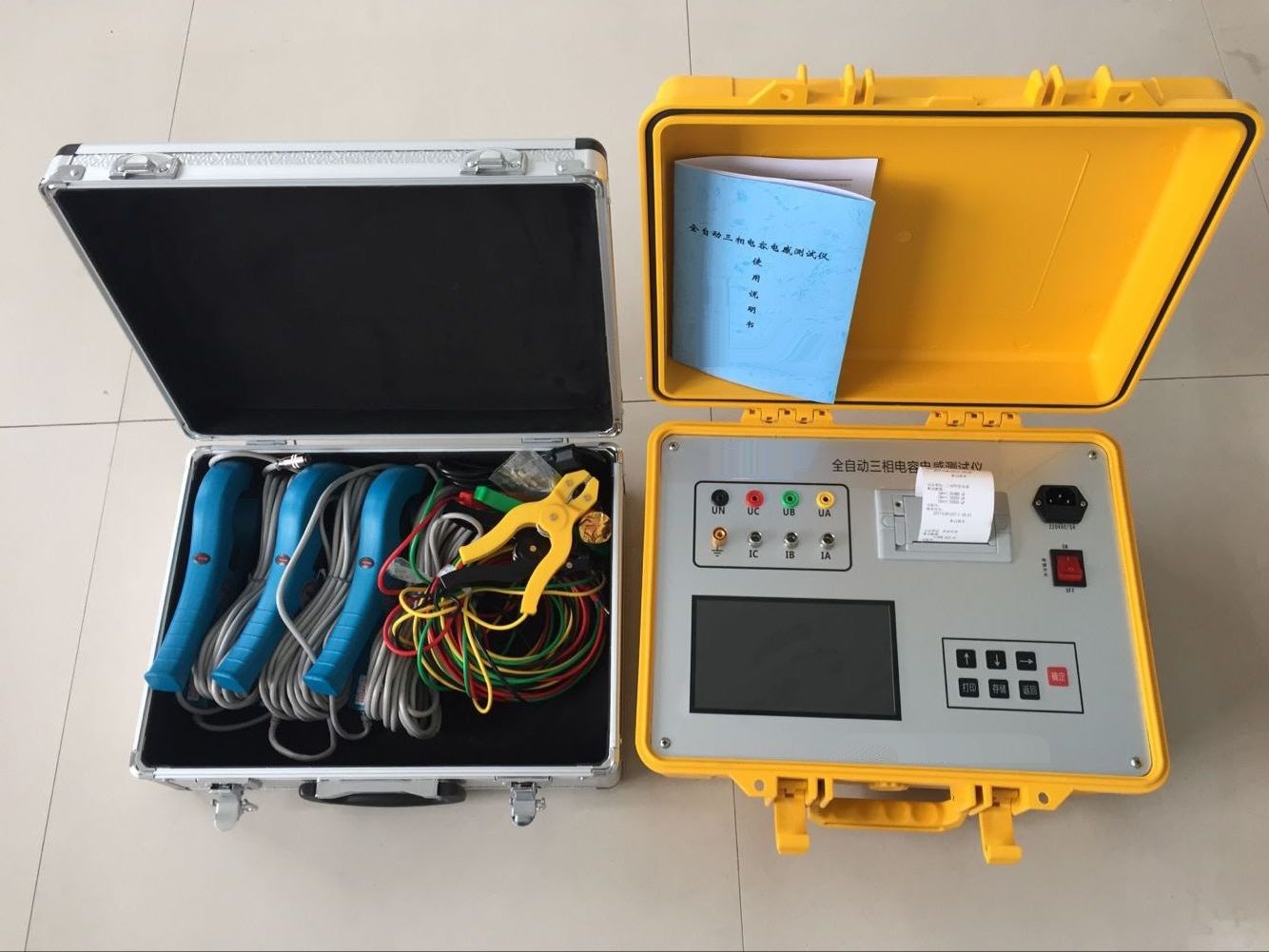

A capacitance and inductance tester is an instrument used to measure the electrical characteristics of capacitors and inductors. It is widely applied in fields such as electronic manufacturing, maintenance, research and development, and education, helping users accurately measure capacitance values of capacitors, inductance values of inductors, and related parameters such as quality factor (Q value), equivalent series resistance (ESR), parallel resistance (ERP), etc. The following is a detailed introduction to capacitance and inductance testers:
Working Principle
Capacitance and inductance testers typically use bridge measurement or resonance method for measurement. The specific steps are as follows:
Bridge measurement method: By constructing a balanced bridge circuit, using known standard capacitors or inductors to compare with the tested capacitor or inductor, thereby calculating the value of the component under test.
Resonance method: By forming a resonant circuit with the tested capacitor or inductor and a known inductor or capacitor, measuring the resonant frequency, and then calculating the value of the component under test.
Main Functions
Capacitance measurement: Measures capacitance (C), equivalent series resistance (ESR), dissipation factor (D or Tanδ), etc. of capacitors.
Inductance measurement: Measures inductance (L), quality factor (Q value), DC resistance (DCR), etc. of inductors.
Frequency range: Supports measurement at different frequency ranges, typically from tens of hertz to several megahertz.
Multiple measurement modes: Provides various measurement modes such as auto-ranging, manual ranging, continuous measurement, etc., to meet different testing needs.
Data storage: Built-in memory can store a large amount of measurement data for subsequent analysis.
Clear display: Usually equipped with a large LCD screen to display measurement results and operation menus.
Protection functions: Equipped with multiple protection functions such as overvoltage protection, overcurrent protection, short-circuit protection, etc., to ensure the safety of equipment and personnel.
Communication interfaces: Usually equipped with USB, RS232 and other communication interfaces, can connect with computers or other devices for data transmission and remote control.
Main Features
High precision: Uses advanced measurement technology and algorithms to ensure high accuracy and stability of measurement results.
Wide range: Supports capacitance measurement from picofarads (pF) to farads (F), and inductance measurement from nanohenries (nH) to henries (H).
Auto-ranging: Can automatically select the appropriate range to simplify operation.
Portable design: Some models are designed to be portable for field use.
User-friendly: Provides an intuitive operation interface and rich function menus for user convenience.
Application Fields
Electronic manufacturing: Used for quality control on production lines to ensure that capacitors and inductors meet performance standards.
Electronic maintenance: Used for repair and fault diagnosis of electronic equipment, identifying faults in capacitors and inductors.
Product development: Used for development and testing of electronic products, evaluating the performance of capacitors and inductors.
Scientific research: Used for measuring capacitors and inductors in scientific research to verify theoretical models.
Education and training: Used for teaching and training in electronic engineering, helping students understand measurement methods and applications of capacitors and inductors.
Usage Precautions
Safe operation: Strictly follow the instructions in the equipment manual to ensure the safety of personnel and equipment.
Environmental requirements: Use in a dry, well-ventilated environment, avoiding moisture and high temperatures.
Regular calibration: Regularly calibrate the tester to ensure the accuracy of measurement results.
Load matching: Ensure that the component under test matches the range of the tester to avoid exceeding the range.
Cleaning and maintenance: Regularly clean the probes and connectors of the tester to ensure good contact.
Purchasing Suggestions
Accuracy requirements: Choose an appropriate accuracy level based on actual needs to ensure the accuracy of measurement results.
Range: Select a tester whose range covers the values of the components under test to ensure applicability.
Function configuration: Choose a tester with corresponding functions based on testing needs, such as data storage, communication interfaces, etc.
Brand and quality: Choose well-known brands and high-quality products to ensure long-term stable operation.
Price and service: Consider price and after-sales service comprehensively, and choose products with high cost performance.
Common Problems and Solutions
Inaccurate measurement results: Check whether the tester is calibrated, whether the probes and connectors are in good contact, and whether the component under test is clean.
Equipment overheating: Check whether the cooling system is working properly, whether there is blockage or dirt, and ensure good ventilation.
Communication failure: Check whether the communication cable is connected correctly and whether the driver is installed correctly.
If you need to purchase or learn more about capacitance and inductance testers, it is recommended to contact professional suppliers or manufacturers, who can provide more detailed technical parameters and application suggestions. I hope this information is helpful to you!