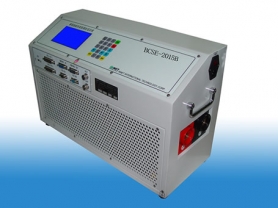

A loop resistance tester is an instrument specifically designed to measure the resistance at contact points and connections in electrical equipment or power systems. This testing is crucial for ensuring the safe operation of power systems, as even a small increase in resistance may indicate poor contact, corrosion, or other issues that could lead to overheating or even fire.
Functions and Features of Loop Resistance Tester
High-precision measurement: It can provide precise resistance measurements, typically reaching the micro-ohm (μΩ) level.
High current output: To obtain accurate measurement results, many loop resistance testers can output high currents up to several hundred amperes to simulate current flow under actual working conditions.
Automatic range adjustment: Some advanced models can automatically select the appropriate measurement range based on the object being tested, simplifying the operation process.
Data storage and analysis: It supports the storage of test data and can transfer data to a computer for further analysis via interfaces such as USB or Bluetooth.
Portability design: Considering the needs of field work, modern loop resistance testers are mostly designed to be lightweight and compact, making them easy to carry and use.
Application Fields
Power industry: Used to detect the contact resistance of key components such as circuit breakers, disconnecting switches, and busbar joints, ensuring their reliability during long-term operation.
Manufacturing: For quality control of contact resistance in motors, transformers, and other electrical products during the production process.
Maintenance and repair: Used to assess the condition of contact points during equipment maintenance and fault troubleshooting, guiding repair work.
Technology Development Trends
With the development of technology, loop resistance testers are also continuously evolving:
Intelligence: Integrating more intelligent functions such as automatic diagnosis, remote monitoring, and cloud data management to improve work efficiency.
Enhanced safety: Enhanced safety features, such as more complete protection circuits and user-friendly interface designs, reduce the risk of misoperation.
Environmental protection and energy saving: Adopting more environmentally friendly materials and technologies to reduce energy consumption, responding to the global trend of energy conservation and emission reduction.
Purchasing Suggestions
When selecting a loop resistance tester, the following aspects should be considered:
Whether the measurement range meets the requirements;
The output current magnitude to ensure accurate measurement results under actual working conditions;
The durability and environmental adaptability of the equipment;
Whether it is easy to operate and maintain;
Cost-effectiveness, comprehensively considering the purchase cost and subsequent maintenance expenses.
In summary, the loop resistance tester is an indispensable tool for ensuring the normal operation of power systems and their components. By regularly using such equipment for inspections, problems can be detected and resolved in a timely manner, thereby avoiding potential safety hazards.