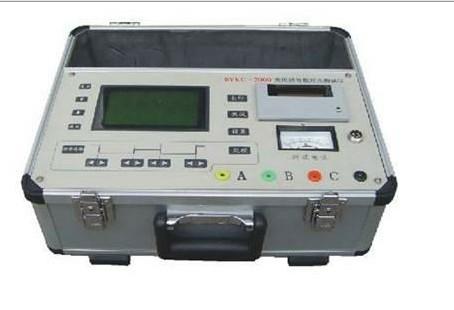

To help you write an article about the series resonant variable frequency test device, here is a detailed outline that you can use to organize your article content.
Title
Series Resonant Variable Frequency Test Device: An Efficient Solution for Power Equipment Withstand Voltage Testing
Introduction
Background: Briefly introduce the application background of the series resonant variable frequency test device and its importance in the power system.
Importance: Emphasize the role of the series resonant variable frequency test device in power system testing, especially its importance in improving testing efficiency and accuracy.
Basics of Series Resonant Variable Frequency Test Device
Definition: Explain the concept of the series resonant variable frequency test device and its application in the power system.
Components: Introduce the main components of the series resonant variable frequency test device, including variable frequency power supply, excitation transformer, reactor, capacitive voltage divider, etc.
Working Principle: Elaborate on the working principle of the series resonant variable frequency test device, including how to achieve resonance between the reactor and the tested capacitor by adjusting the power supply frequency, thereby obtaining high voltage and large current on the test object.
Technical Specifications and Performance Indicators
Test Range: List the voltage levels and current magnitudes that the series resonant variable frequency test device can handle.
Frequency Range: The test frequency range, usually between 30Hz and 300Hz.
Output Power: The maximum output power of the test device.
Accuracy: The precision of the test device in detection and measurement.
Portability: The portability of modern series resonant variable frequency test devices, suitable for on-site use.
Other Features: Such as automatic voltage increase, automatic voltage decrease, overload protection, fault alarm, etc.
Usage Methods and Operation Guide
Installation Preparation: Describe how to install the series resonant variable frequency test device and prepare to connect the equipment under test.
Parameter Setting: Detail how to set test frequency, voltage, current, and other parameters.
Operation Steps:
Connect the test device to the test object.
Set the test parameters.
Start increasing the voltage until the preset test voltage is reached.
Observe and record any abnormal conditions that may occur during the test.
After completing the test, gradually reduce the voltage and turn off the power.
Data Reading and Recording: Explain how to read test data and record it.
Precautions and Maintenance
Safety Instructions: Emphasize the safety precautions to be noted when using the series resonant variable frequency test device.
Maintenance: Provide daily maintenance suggestions, such as regular calibration, keeping the equipment clean, etc.
Troubleshooting: Provide some common problems and their solutions.
Application Cases
Cable Withstand Voltage Test: Specifically introduce how to use the series resonant variable frequency test device for cable withstand voltage testing.
Transformer Withstand Voltage Test: Describe the application of the series resonant variable frequency test device in transformer withstand voltage testing.
Switchgear Withstand Voltage Test: Provide several practical application scenarios to demonstrate the performance of the series resonant variable frequency test device in switchgear withstand voltage testing.
Technical Advantages and Limitations
Advantages: Discuss the benefits brought by the series resonant variable frequency test device, such as high efficiency, low loss, high flexibility, etc.
Limitations: Point out possible limiting factors, such as cost, applicability in specific environments, etc.
Future Development Trends
Technological Innovation: Look forward to possible technological advancements, such as more efficient signal processing technology, intelligent operation, etc.
Market Prospects: Mention the future development potential and trends of the series resonant variable frequency test device market.
Conclusion
Summary: Review the importance and application prospects of the series resonant variable frequency test device.
Call to Action: Encourage the power industry to adopt advanced series resonant variable frequency test device technology to improve the safety and reliability of the power system.
References
Technical Manuals: List technical manuals provided by manufacturers.
Academic Research: List relevant academic papers and research reports.
Industry Reports: Provide links to authoritative reports from the power industry.
With the above structure, you can write a comprehensive article introducing the series resonant variable frequency test device. Remember to incorporate the latest research results and technological advancements when writing to ensure the content is accurate and timely. If you need more specific information or technical details, feel free to ask me at any time.