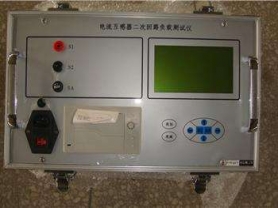

In the installation and maintenance of power systems and industrial electrical equipment, loop resistance testing is a crucial inspection task. It is primarily used to evaluate the contact resistance at electrical connection points, ensuring that these connections can conduct current stably and efficiently, avoiding safety hazards or energy losses caused by poor contact. As a professional tool for performing this task, the loop resistance tester plays an irreplaceable role in ensuring the safety and reliability of power systems.
1. What is a Loop Resistance Tester?
A loop resistance tester is an instrument specifically designed to measure the contact resistance between electrical connection points (such as circuit breaker contacts, busbar connections, etc.). By applying a known DC current and measuring the resulting voltage drop, the resistance value between two points is calculated. High-quality loop resistance testers can perform precise measurements under high current conditions, ensuring the authenticity and reliability of test results.
2. Main Functions and Features
High-precision measurement: Utilizes advanced measurement technology to provide accurate resistance readings, typically achieving micro-ohm level precision.
High current output: To simulate the current intensity under actual operating conditions, many models of loop resistance testers can provide high currents up to several hundred amperes.
Fast response: Modern designs allow the tester to complete the testing process in a short time, improving work efficiency.
Portable design: Considering the needs of field testing, many products adopt lightweight and compact designs for easy portability and operation.
Data processing capability: Supports data storage, review, and export to a computer for further analysis.
3. Application Scenarios
Power system maintenance: Regularly conduct loop resistance tests on key components such as switchgear and disconnectors in substations to promptly identify and resolve potential issues.
Electrical equipment manufacturing: Perform strict quality inspections before equipment leaves the factory to ensure all electrical connection points meet standard requirements.
Industrial production: For enterprises using a large amount of electrical equipment, utilizing loop resistance testers can effectively prevent production interruptions or safety accidents caused by poor contact.
4. Selection Considerations
When selecting a loop resistance tester, the following factors should be considered:
Test range: Choose an appropriate measurement range based on the magnitude of resistance to be measured.
Current level: Ensure the selected device can provide sufficient current to meet testing needs in different situations.
Ease of use: Includes factors such as user interface friendliness and portability.
Additional features: For example, whether it has automatic temperature compensation and can interconnect with other devices.
5. Summary
The loop resistance tester is one of the important tools for ensuring the safe operation of power systems and various electrical equipment. By regularly using this device for testing, not only can the overall stability of the system be improved, but also the service life of equipment can be extended and the failure rate reduced. With technological development, loop resistance testers are becoming increasingly intelligent and convenient, providing users with more comprehensive services. Whether for power companies or industrial enterprises, the rational use of this tool will have a positive impact on their daily operation and maintenance work.