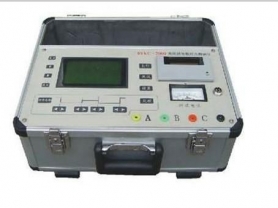

Including impedance matching and power transmission efficiency.
Cooling system: Since high-current generators produce a large amount of heat during operation, an efficient cooling mechanism (such as air cooling or water cooling) is crucial to ensure long-term stable operation of the equipment.
3. Technical Specifications and Performance Indicators
Key parameters: List common technical parameters of high-current generators, such as maximum output current, duration, voltage range, frequency response, accuracy, stability, etc.
Performance characteristics: Discuss the impact of these parameters on practical applications to help users select equipment suitable for specific needs. For example, some applications may require instantaneous extremely high current, while others focus more on long-term stable output.
4. Application Fields
Power system testing: Used for testing the operating characteristics of protective devices such as circuit breakers and switchgear, ensuring they can operate correctly under overload or short-circuit conditions.
Electromagnetic compatibility testing: Simulate high-current interference situations that may occur in actual environments to evaluate the immunity of electronic devices.
Industrial heating: Applied in fields such as resistance welding and induction heating, utilizing the thermal effect generated by current passing through materials for processing.
Scientific research experiments: Support multidisciplinary research in physics, chemistry, materials science, etc., especially in exploring new material properties and developing new devices.
Battery charge and discharge testing: Verify the performance and safety of power battery packs under high-rate charge and discharge conditions.
5. Selection Guide
Considerations: Provide key factors to consider when purchasing a high-current generator, such as applicable test objects, required output current, portability, automation level, cost-effectiveness, etc.
Recommended brands and models: Based on market research, recommend high-quality products from well-known brands and briefly introduce their features and advantages.
6. Usage Methods and Practices
Operating steps: Share the standard process of using a high-current generator for testing or experiments, from preparation to actual operation to data recording, ensuring every step is executed accurately.
Safety measures: Emphasize safety precautions to be taken when using a high-current generator, such as proper grounding, wearing protective equipment, and following operating procedures to minimize risks.
Case studies: Demonstrate the practical effects and advantages of high-current generators through specific application cases, analyze key factors for successful implementation, as well as customer feedback and improvement suggestions.
7. Common Problems and Solutions
Troubleshooting: Summarize possible problems encountered during the use of high-current generators, such as startup failure, unstable output, etc., and provide corresponding solutions or debugging suggestions.
Maintenance: Discuss how to properly maintain and service high-current generators to ensure long-term stable operation. For example, regularly check component status, clean heat sinks, replace aging parts, etc.
8. Technological Innovation and Development
Latest advances: Explore the latest technological progress in the field of high-current generators, such as digital control systems, high-efficiency energy-saving designs, modular architectures, etc.
Future trends: Look forward to future developments in this field, such as more compact designs, higher conversion efficiency, better compatibility, and intelligent management functions.
9. Standardization and Regulatory Compliance
International standards: Discuss the requirements of international and national standards for high-current generators, introduce relevant standard documents (such as IEC, IEEE, etc.), and emphasize the importance of adhering to standards.
Certification and compliance: Explain the significance of common certification marks in the market, such as CE, UL, etc., to ensure that purchased products comply with local laws and regulations.
Conclusion
Summary: Review the core content of high-current generators, reaffirming their important role in ensuring the accuracy and safety of electrical equipment testing.
Call to action: Encourage readers to pay attention to and invest in advanced high-current generator technology and equipment to enhance their business level and technical competitiveness.
If you need in-depth discussion on a specific part or have other special needs, please feel free to let us know.